The Payment That Wouldn't Land: Reading a Failed UK Casino Deposit the Calm Way
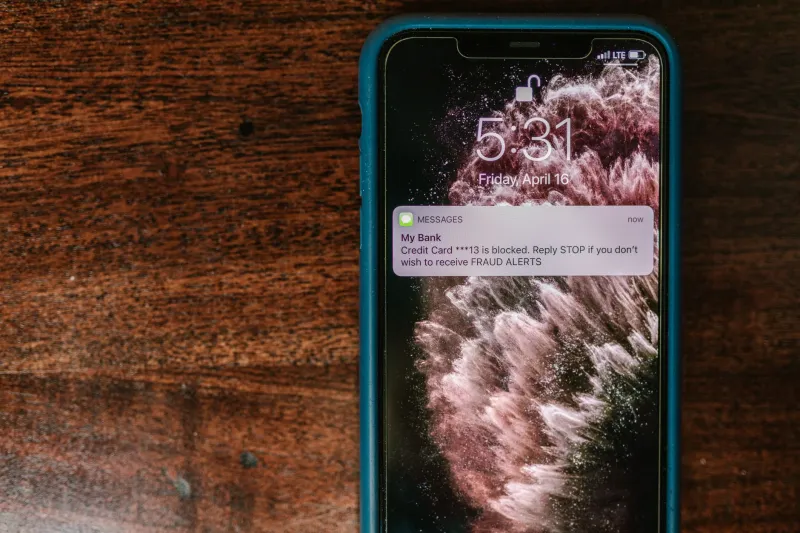
You tap deposit, wait for the little spinner, and get a red message instead. No money leaves your account, or worse, it looks like it has gone somewhere and the casino balance has not moved. In the moment, it is tempting to treat a failed deposit as a glitch to be battered into submission with another tap, then another. Most of the time, though, a declined payment is not a bug in the matrix. It is a message. And in 2026, with UK banking controls and casino checks both doing more behind the scenes, that message is worth reading before you try again.
A decline is a signal, not a challenge
Casino deposits pass through several gates. Your bank or payment provider sees the request, the casino's payment processor sees it, and the casino account itself may have limits or checks attached. A decline can come from any of those places. It might be a gambling block you switched on months ago and forgot about. It might be a card rule, a verification step, or a pending payment that has not settled. It might even be a routine fraud check that has nothing to do with gambling at all.
The key point for casual players is simple: a failed deposit is often the system asking you to stop and look, not asking you to find a clever way around it. That pause is a feature, not an inconvenience. If you have ever set a budget and then felt your hand hovering over the deposit button one more time, you already know why a small speed bump can be useful.
The usual suspects behind a blocked deposit
UK players tend to meet the same handful of culprits. None of them are personal. Most are boring plumbing.
- A bank gambling block. Many UK banks and app-based accounts let you switch on a block for gambling transactions. These can be easy to enable and easy to forget. If your deposit fails while your card works fine at the supermarket, check your banking app's controls first.
- Card restrictions. Credit cards have been barred for gambling in the UK since 2020, and some debit cards or prepaid cards also have gambling restrictions. A card that works elsewhere is not automatically allowed here.
- 3D Secure or verification. Your bank may want you to approve the payment in its app. If that prompt times out or you miss it, the deposit can fail even though nothing is wrong with your balance.
- Pending payment checks. Some payments sit in a pending state while the bank or processor checks them. The casino may not credit your balance until the payment clears. Tapping deposit again can create a second pending request, which is exactly the sort of mess you want to avoid.
- Account limits or cool-off settings. If you have set a deposit limit, a time-out or a reality check, the casino may block a deposit that breaches it. That is the setting doing its job.
- Merchant descriptor confusion. Sometimes a payment is declined because the bank does not recognise the casino's payment descriptor. A quick look at the transaction details can explain more than a repeated tap ever will.
Why bulldozing through is a bad trade
Repeatedly retrying a failed deposit is rarely harmless. At best, you create several pending holds and spend the next few days wondering which one will clear. At worst, you trigger extra fraud checks, confuse the casino's payment team and make your own account look messier than it needs to be. There is also the quieter cost: a failed deposit is a natural moment to check whether you actually meant to deposit, and whether the amount still fits the budget you set before you opened the site.
That is not about telling adults what to do. It is about recognising that fast payments and fast spins reward momentum. A declined deposit interrupts that momentum. Used well, the interruption is a free reality check.
A calm five-minute check
When a deposit fails, resist the urge to hammer the button. Instead, try this short routine.
- Read the exact error message. Screenshot it if you can. 'Declined' is not the same as 'pending', 'blocked' or 'verification required'.
- Open your banking app. Look for a gambling block, card restriction, approval prompt or pending transaction. Check the amount and the merchant name.
- Check your casino account. Look at deposit limits, account status and any verification messages. If the site has a transaction or payment history tab, read it before doing anything else.
- Wait a few minutes. Pending checks can clear. A second deposit attempt during a pending check can double the confusion.
- Ask support one clear question. Give them the time, amount, payment method and the exact message. Ask whether the payment is pending, declined or blocked, and what the next safe step is.
What not to do
Do not try to dodge a bank block by using someone else's card, a virtual card from a different country, a VPN or a string of tiny deposits. Those moves can breach the casino's terms, create withdrawal problems later and turn a simple pause into a proper headache. They also undermine the whole point of safer play controls, which is to give you a moment of friction when you might need one.
If a deposit fails because of a limit or cool-off you set yourself, treat that as a win. The setting worked. Close the tab, make a cup of tea and come back when the limit allows it. The slots will still be there. The reels are not going anywhere, and neither is your budget if you leave it alone.
The pause is part of the product
A blocked deposit is not a personal rejection, and it is not usually a sign that you need to try harder. It is a payment system, a bank control or a casino rule doing its job. The sensible response is to read the message, check the basics, ask one clear question if needed and then decide whether you still want to deposit at all.
Sometimes the most useful thing a casino site can do is say no for a minute. A failed deposit is that minute. Take it.