The Quiet Spin Test: What a Silent Slot Session Reveals About Your Budget
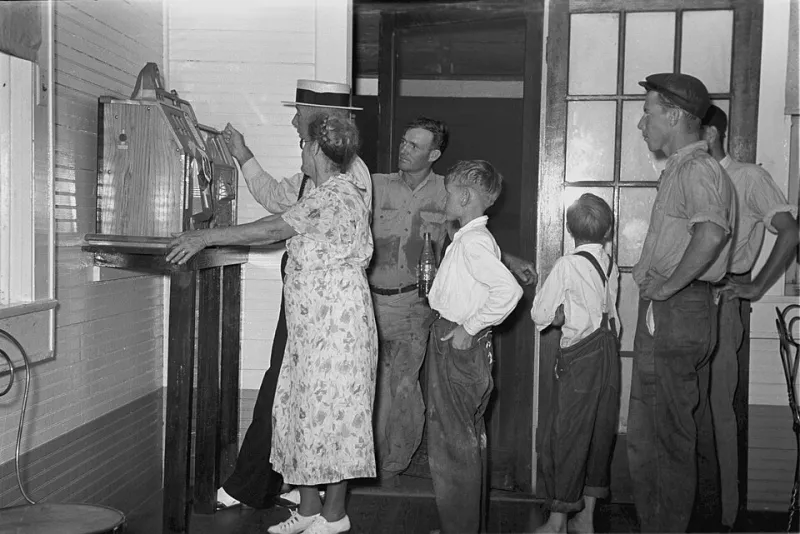
Photo: Russell Lee, Public domain, via Wikimedia Commons
Slot machines are not just visuals and maths. They are also a soundtrack. The reels clatter, the bonus round announces itself, and a win — however small — gets a little burst of ceremony. None of that is accidental. Audio is part of the product design, and it is very good at setting a pace without you quite noticing.
So what happens when you turn it off? Not as a protest, and not as a magic trick to improve your odds, but as a simple experiment. A quiet session can be surprisingly revealing. It strips away one layer of the game’s atmosphere and leaves you with the bits that actually matter: your stake, your budget, your time, and the paytable.
Why slot audio is doing more than filling silence
A slot’s sound design tends to follow the rhythm of play. Spin effects give you feedback. Win jingles reward attention. Background music loops in a way that can make a quiet spell feel less quiet, and a busy spell feel even busier. In 2026, UK-licensed slots can have layered soundscapes that respond to almost everything on screen.
That does not make audio evil. It makes it effective. A well-made slot is supposed to feel engaging, and sound is a big part of that. But it is worth being honest about what it is doing: it is shaping the mood and tempo of your session. It is not a safety feature, and it is not a signal about whether a slot is ‘due’ a win.
The quiet spin test: a small, low-stakes experiment
The idea is simple. Pick a slot you already know, set a small budget before you start, and play one short session with the sound off. Fifteen minutes is plenty. Use your device’s volume controls rather than hunting through site settings, and keep the stake the same throughout.
Before you begin, note three things: the time, your balance, and your stake. Then mute the sound, start a timer, and play as you normally would — within your budget. Do not increase your stake halfway through to ‘make the test interesting’. That defeats the point. When the timer ends, stop and note the same three things again.
You are not looking for a scientific result. You are looking for a few honest observations. Did you check your balance more often? Did the session feel slower, flatter, or more boring? Did you notice the paytable or the game rules more clearly? Did you feel an urge to chase the missing excitement with bigger spins?
What changes when the fanfare goes
Many players find that a muted slot feels oddly flat. Wins are quieter, bonus teases are less theatrical, and the whole thing can seem more mechanical. That is not a fault. It is simply the game without one of its mood-setting tools.
For some people, that flatness is useful. It makes the session feel less like a show and more like a series of paid spins. You may notice how often you are pressing the button, how quickly your balance moves, or how much of the experience was being carried by the soundtrack. For others, muting is annoying and removes the fun. That is fine too. The point is not to play silently forever. The point is to choose the atmosphere rather than drift along with it.
What muting cannot do is change the maths. The RTP stays the same. The volatility stays the same. The chance of a win does not improve because the music is off. A quiet session is a spotlight on your habits, not a shortcut to better odds.
The paytable does not care about the soundtrack
If a slot only makes sense when the music is turned up, that is worth knowing. A game should still stand up when you look at its stake range, its published RTP, its volatility, and its bonus rules. Those are the details that help you decide whether it suits a casual session and a fixed budget.
Before you unmute and dive back in, spend a minute on the paytable. Check what the top symbols pay, how the bonus is triggered, and whether the stake you have chosen fits the budget you set. Sound can make a slot feel generous. The numbers are the part that tells you what you are actually buying with each spin.
A muted session is not a safety tool — it is a mirror
It would be easy to oversell this. Turning the sound off is not a responsible-gambling feature, and it will not stop someone who is determined to chase losses. It is just a small, practical way to notice the pace of your play. Use it alongside the tools that do the heavier lifting: deposit limits, reality checks, time-outs, and a budget that was set before you opened the site.
If a silent session makes you want to spin faster or stake higher just to feel something, treat that as useful information. It may be a sign to take a break, not a sign to turn the volume up. If you miss the sound, turn it back on — but keep the budget where it was.
How to get something useful from the test
- Choose a low stake and a short timer.
- Mute the device, not your common sense.
- Keep the stake steady for the whole session.
- Note your balance at the start and end.
- Take a proper break afterwards, even if you won.
The quiet spin test is not about proving that slots are louder than they seem. It is about hearing your own habits more clearly for fifteen minutes. The soundtrack can be fun. The paytable and your budget should still be the headline act.